
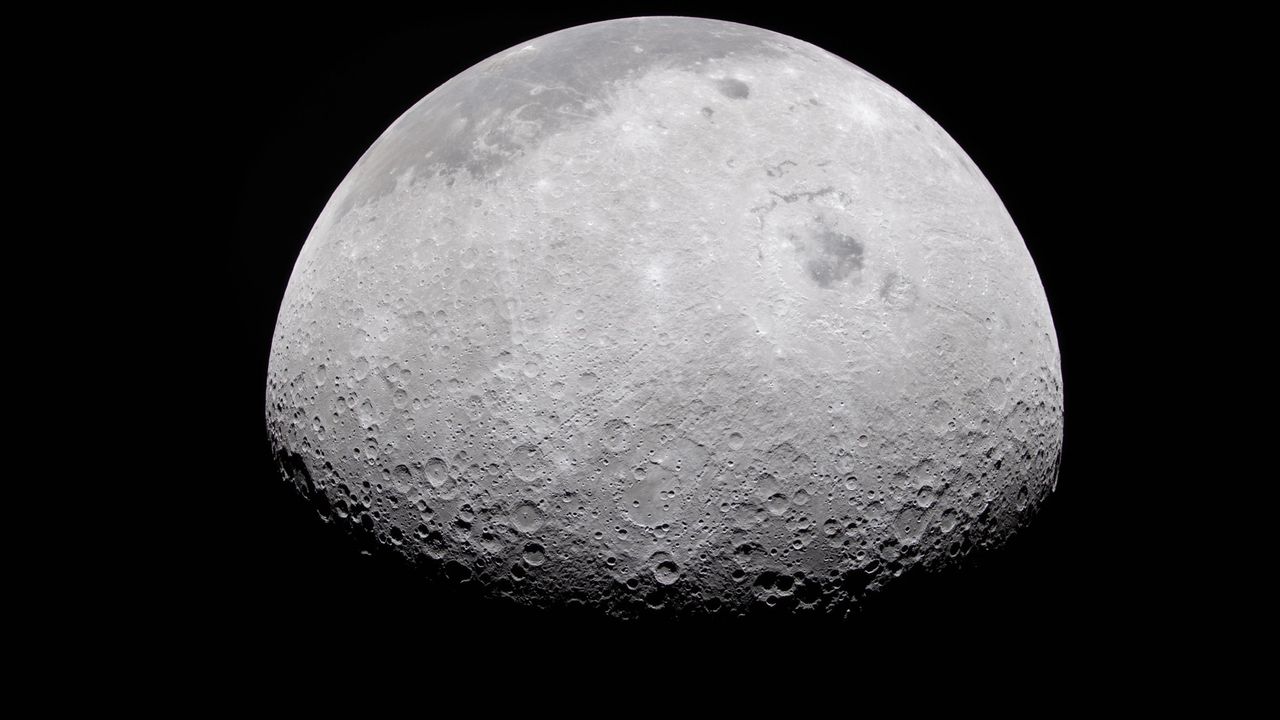
Earth’s moon is due for a human-made impact this August courtesy of a spent SpaceX Falcon 9 upper stage.
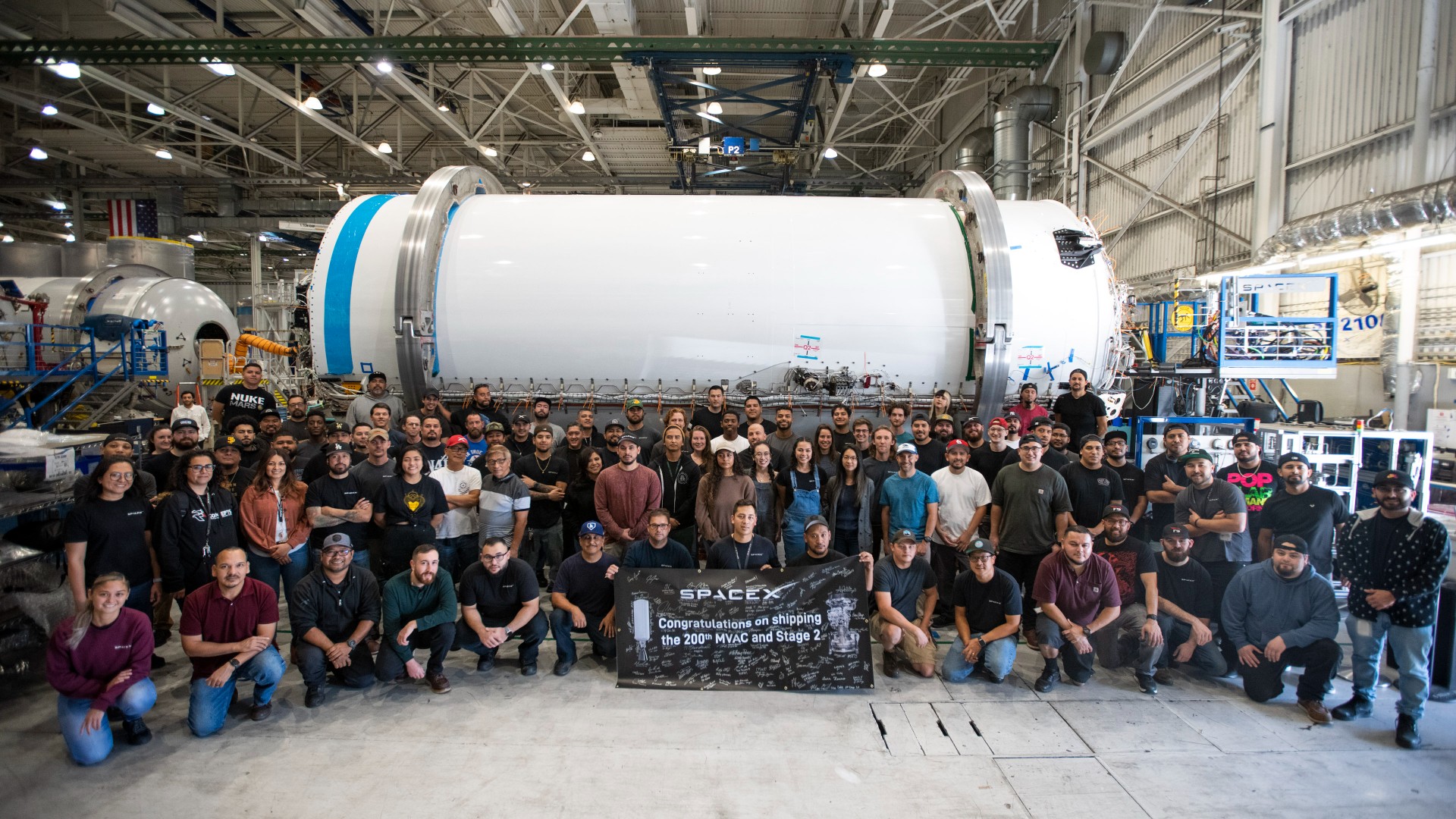
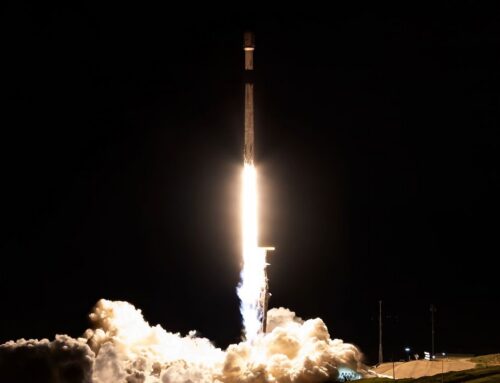
The Falcon 9 upper stage is left over from the launch that sent Firefly’s Blue Ghost-1 lander to the moon on Jan. 15, 2025 by way of NASA’s Commercial Lunar Payload Services (CLPS) initiative. Also sent moonward on that flight was the Hakuto-R Mission 2, called Resilience, a robotic lunar lander developed by the Japanese company ispace.
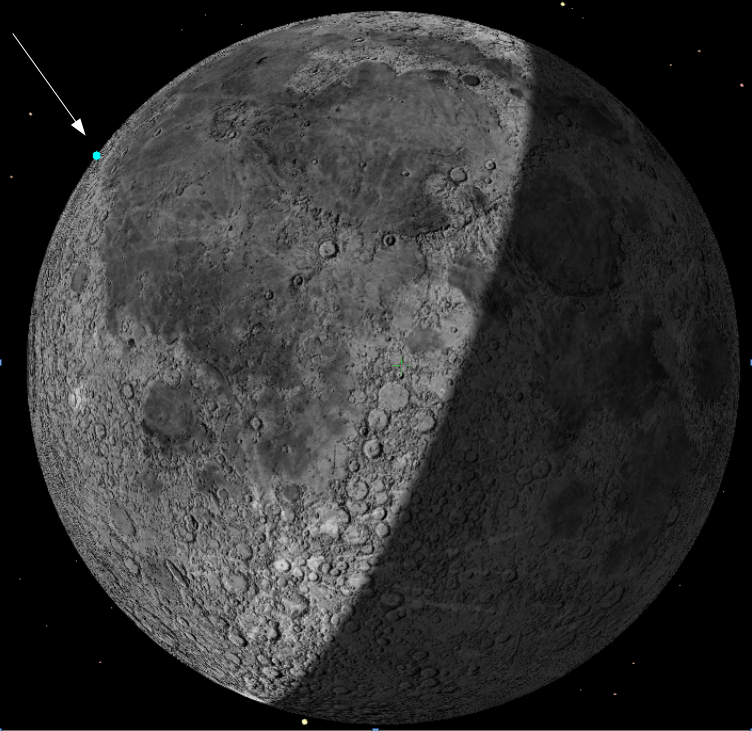
This striking event is expected to occur close to Einstein Crater near the moon’s western limb and could be visible by ground and space-based telescopes. Varying forecasts have sparked debate on whether or not we’ll be able to see the rocket body slam into the moon on Aug. 5, and, if so, how both citizen scientists and astronomers can best observe it it.
‘This wonderful environment of the moon’
The consequences of this rocket mission’s leftover hardware is on target for a “limb shot,” meaning it could strike the far western edge of the moon. Another possible impact site is Bell Crater, just out of sight on the moon’s far side.
Earlier this month, NASA’s Solar System Exploration Research Virtual Institute (SSERVI) hosted a discussion with experts regarding the approaching impact. Taking part in the meeting of moon-watching specialists was Brian Day, SSERVI’s lead for citizen science and community development.
“One of the things that is really important here with this impact that is coming up is it serves as a reminder to us that the moon is a dynamic environment. We think of it as being static. It is not. It is being whacked. It is changing,” Day said.
Citizen scientists can actually get involved to help understand the dynamic environment of the moon thanks to the Impact Flash! program, said Day.
“And that can be done either with instrumentation you have in your own backyard or you can use ours in orbit around the moon,” Day added. “This impact is a great reminder of this wonderful environment of the moon.”
Moon viewing maybe
But will the impact be visible from Earth? Any assured answer is in a hedge-your-bet, yes/no mind bender.
“I’ve gone from ‘probably’ to ‘probably not,’ and more recently, to ‘maybe,'” said Bill Gray of Project Pluto, creator of a telescope-tracking application used worldwide by professional and amateur astronomers alike to keep tabs on asteroids, comets, and other near-Earth objects.
It was Gray’s work with Project Pluto that got the word out about the roughly four metric ton Falcon 9 upper stage intersection with the moon at over two kilometers a second. In September 2025, his software for computing orbits analyzed the observations and projected an impact with the moon on Aug. 5, 2026.
“Even though we have tracked it since launch, our idea of when and where it’s going to hit are currently fuzzy by minutes and dozens of kilometers,” Gray said. “But we will refine that and get an idea of where it’s going to hit.”
Out on a limb
“I think it’s going to be very subtle. I think it’s going to be very, very hard to see, if not impossible. But there’s always a chance,” said William Cooke, program manager of NASA’s Meteoroid Environment Office at Marshall Space Flight Center in Huntsville, Alabama.
Cooke quickly added that, along with a rapid-fire impact flash, the upper stage impact will kick up huge amounts of lunar regolith, the dust that coats the surface of the moon.
“It will excavate that out of the crater and this may create a plume that will be illuminated by the sun,” Cooke said. “So, it’s not only important to look for the impact flash, but if this occurs close enough to the limb, you may be able to see that plume of material rising, and that would be significant as well.”
Time and inclination
Still, concerning the spotting of that over-the-limb plume, it remains a guessing game.
How much material might be lofted, and how high will it go? Given the moon’s one-sixth gravity, how long will it take for that material to fall back onto the lunar surface?
“So, no good feeling for how long the plume will be up there,” Cooke said.
Putting aside all the unknowns, it is Cooke’s view that “if you’ve got the time and the inclination, it might be worth a look.”
Regarding the possibility of seeing the ejecta plume, Gray of Project Pluto, later told Space.com he agreed. “We pretty much shrugged about this and said “we dunno’ and we should look and see if we can observe it.”
On-location orbiters
Speaking of time and inclination, there is an on-location witness to the before and after results from the rocket stage plummeting into the moon.
Brent Garry is the project scientist for NASA’s Lunar Reconnaissance Orbiter (LRO) at Goddard Space Flight Center in Greenbelt, Maryland. LRO will be passing over the projected crash site about seven days prior to the impact and about seven days after the impact, Garry said.
“After the impact we might have a little bit more knowledge of where it is. We can do some additional targeting about a week after the impact and get some targeting over where the site is,” said Garry.
Different observers
This event emphasizes that when you’re looking for impact flashes on the moon, either anthropogenic or natural, there’s a need for as many observers as possible, said SSERVO’s Day.
“Because these flashes are so short, they can very much mimic a cosmic ray impact on your detector and just be a sudden blip,” said Day.
What really helps researcher’s distinguish between cosmic ray impacts and actual flashes on the moon is to have different observers in different locations observing that flash at the same time, Day said.
“And if you see that, if you have that coincidence of events,” Day said, “that’s one of the reasons why we like to have as many people looking as possible.”







Leave A Comment
You must be logged in to post a comment.