
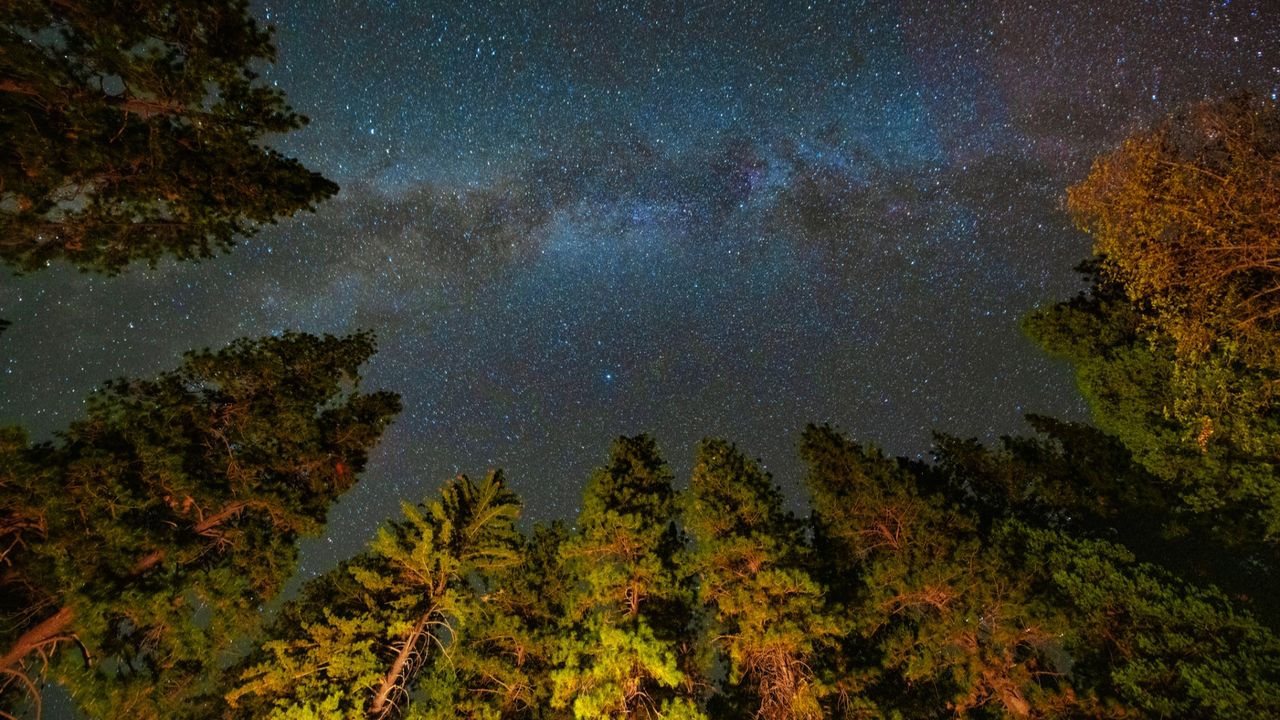
Every year, millions of people travel to remote, protected “dark-sky parks” in search of experiences that depend on true darkness — photographing the Milky Way’s heart arcing overhead, observing nocturnal wildlife in its natural rhythm, or simply standing beneath an ink-black sea of stars unblurred by artificial light.
Scientists have long warned that rising levels of artificial light — increasingly amplified by satellite megaconstellations orbiting our planet — are steadily eroding these nightscapes, disrupting ecosystems, affecting human health and dimming views of stars and distant celestial objects. Darkness itself carries no price tag, however, meaning its loss has largely been absent from the economic calculations that guide development and outdoor lighting decisions. Now, new research attempts to translate that loss visible in monetary terms.
A study combining satellite data with on-the-ground surveys of visitors at several “gold-tier” dark-sky sites found that people were less likely to choose parks with greater artificial skyglow or poorer night-sky conditions, and showed a clear willingness to pay more for darker skies.
On average, visitors would pay about $18 more per trip for marginally darker skies, and roughly $45 more per night for a one-step improvement on the Bortle Dark Sky Scale, a widely used measure of night-sky quality.
“This may seem really small at the per-visitor and per-trip unit estimate,” said Jordan Smith, the study’s lead author and director of the Institute of Outdoor Recreation and Tourism at Utah State University, “but when we scale through park-wide visitation, it becomes very, very significant.”
Over a four-month period, the researchers estimated that light pollution reduced the recreational value of flagship dark-sky destinations in the U.S. by between $25 million and nearly $66 million.
The figures, presented at the 248th meeting of the American Astronomical Society in California, do not represent lost park revenue, but what economists call “welfare losses” — the decline in visitor satisfaction when environmental quality deteriorates. The concept is akin to paying for a concert expecting excellent sound and instead finding the speakers distorted; the performance still occurs, but it feels worth less than anticipated.
By assigning a dollar value to changes in night-sky quality, the researchers argue, policymakers gain a way to weigh the hidden costs of artificial lighting against the benefits of development and outdoor illumination.
“It’s a foundational building block that allows that cost-benefit analysis to subsequently occur,” Smith said.
Speaking at a press briefing during the conference, Smith said a central challenge is the gap between measuring light pollution and measuring what it costs in lived experience. Satellites and ground instruments can track where artificial light is spreading and how quickly it is increasing, he said, “but they can’t tell us much about what that value is — what is actually lost due to anthropogenic light at night?”
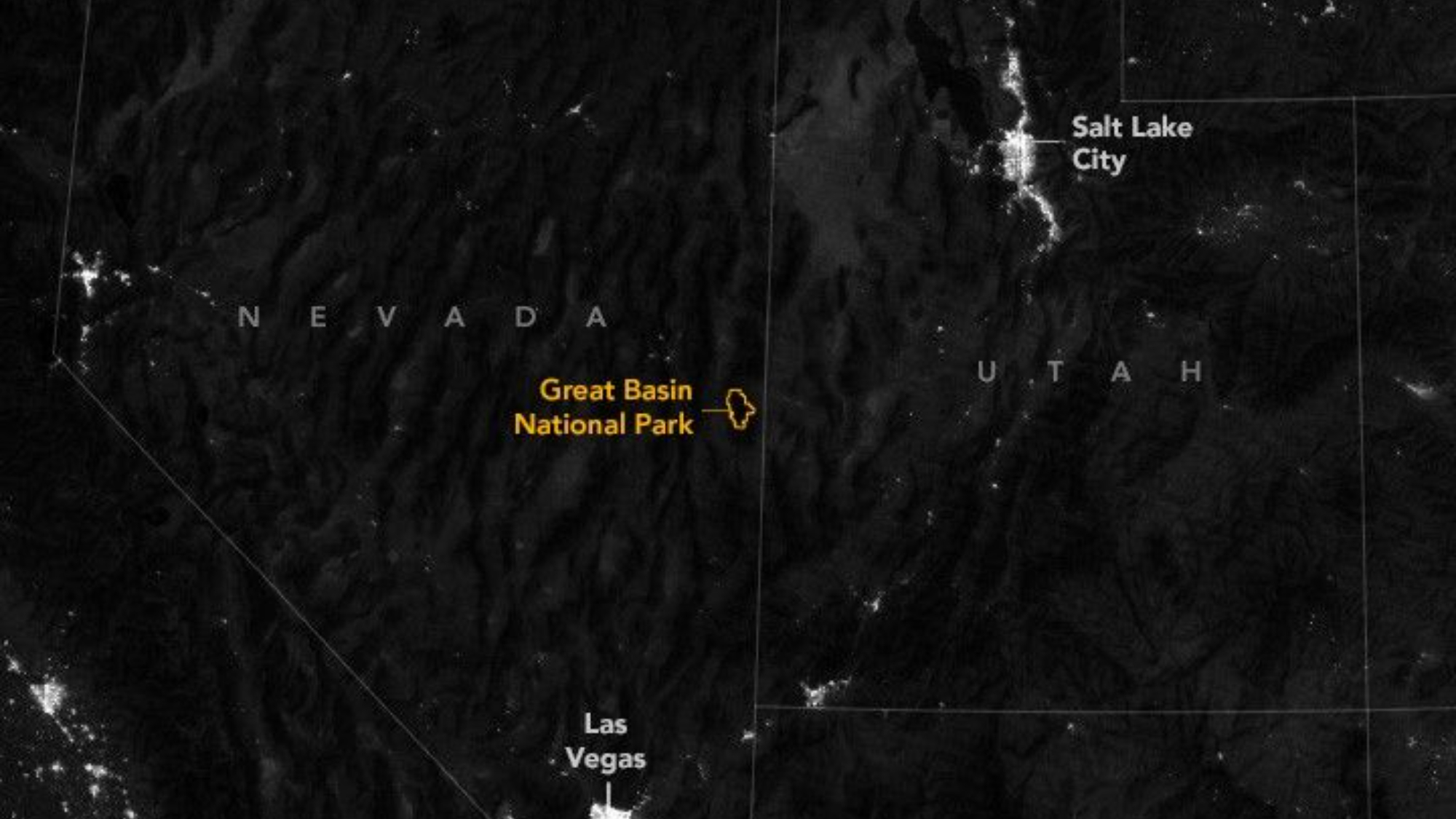
To bridge that gap, Smith and his colleagues focused on the Colorado Plateau, a rugged region spanning Utah, Arizona, Colorado and New Mexico that contains one of the world’s highest concentrations of “gold-tier” dark-sky sites, a designation that signifies the darkest and clearest night skies on Earth.
Over 82 nights in April, May, September and October, researchers interviewed visitors after dusk at campgrounds, scenic overlooks and parking areas. In total, they surveyed 634 travelers across nine destinations, including Arches, Bryce Canyon, Canyonlands and Natural Bridges National Monument, focusing on visitors whose trips depended specifically on high-quality night skies, the study notes.
By pairing survey responses with satellite measurements of nighttime brightness and local atmospheric conditions — including humidity, moonlight and airborne particles, all of which affect sky visibility — the team found a consistent preference for darker skies and a willingness to pay more for them.
The highest projected welfare losses, the researchers found, were heavily concentrated at premier destinations, led by the Grand Canyon and Zion national parks. Smaller or more remote parks showed comparatively modest total losses, a result driven by fewer visitors rather than an absence of dark-sky value, the study notes.
The researchers suggest that extending this kind of monitoring across a full year and over multiple years could help treat the night sky not only as a scientific and cultural asset, but as a measurable economic asset whose value changes with lighting policy, development and conservation.
As cities expand and artificial light continues to spread, studies like this are reframing a question once largely confined to science as an economic one: what is a star-filled sky worth?






Leave A Comment
You must be logged in to post a comment.